I’ve started going through my archive of drafts lately and re-editing, finessing and refining a few that I found there (starting with Pineapple Cake Cookies).
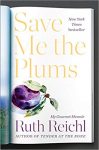
If you’ve been following EE long, you know that I am a Ruth Reichl super fan. Her latest book, Save Me the Plums, was published almost a year ago. When I first heard of it’s publication, I pre-ordered my copy. Here is my review:

This might be the Reichl memoir we’ve all been waiting for as she explores and explains just what exactly happened to Gourmet. (Sad face.)
As the last editor of the distinguished culinary institution, she has been maligned and blamed for Gourmet‘s demise. In Save Me the Plums: My Gourmet Memoir, she doesn’t pull any punches and states she should have seen it coming.
I think it’s obvious that the writing was on the wall even before she accepted the editor-in-chief gig. You are not to blame, Ruth.
I became a fan of the magazine in the 90s. As I revisit some of the magazines that I have hoarded (some from Reichl’s reign), I see it through new (or rather older) eyes. Most of the editions feel like over-the-top Christmas catalogs full of all the things I coveted but would never have. (Read “luxury items” and sometimes ultra-luxury at that—Rolexes, Mikimoto pearls, high end appliances, Jaguars.) I was struck at her comment about wooing advertisers:
…soon I understood that the magazine we were selling depended entirely on the needs of the client. Gourmet might be a lifestyle publication, a humble homemaker’s bible, a travel magazine, or an epicurean pioneer. We might be upscale or strictly down-to-earth. On some days we emphasized the quality of our recipes; on others we acted as if they did not exist. (88)
How could the magazine find its identity and voice under this bipolar approach. Was its modern inception a lifestyle pub or a cooking magazine? I’m not sure it ever found out.
I thoroughly enjoyed learning about the big personalities and the politics that was and is Condé Nast. I relished (as with all of Reichl’s writing) her honesty and descriptive writing. As she lives out her dream and passion, the food narratives are imaginative. She eats a “chocolate concoction” and is put in a trance as the flavors of cream, butter, cognac and coffee mixed together in the truffle. “As the carousel of flavors whirled through my brain, I dreamed myself into a painting by Renoir. I was in a Paris restaurant at the turn of the century, gazing int an orange gilt-edged mirror” (167).
My favorite section of the entire book was Chapter 15: “Severine.” She relates an over-the-top business trip to Paris. In an expensive vintage shop, she finds the perfect black dress. It was literally made for her. As she ponders the expensive price tag over dinner, she meets an older man that leads her to some truths. The entire chapter reads like a stand-alone short story.
Later, on a economically-themed Parisian trip, she encounters the same distinguished gentleman who feeds her more perfect bits of wisdom: “Luxury is best appointed in small portions. When it becomes routine it loses its allure” (246). This adage comes just as she starts to review her life at the magazine.
Reichl tries to take the blame and is devastated by the abrupt end, the end of the institution that was Gourmet and the end to the family that she created in her ten-year run as editor. She talks about that emotion and the healing process more in My Kitchen Year: 136 Recipes That Saved My Life.
I’m glad she followed that work up with Save Me the Plums. The ending of her current memoir is not dark and dire, it’s uplifting and shows that following a passion may create some heartache but we’re always the better for it.
For all my Ruth gushings, click here.
I am linking up with Foodies Reads.

Stay tuned for some other archived re-edited versions. I just might be announcing a new theme as well. We will see…